How to Choose a Quad Bike Desert Safari in Dubai
Choosing a quad bike desert safari in Dubai is less about chasing the most dramatic dunes and more about matching the ride to your experience, comfort and sense of safety. The desert looks open and simple from a distance, but terrain, heat, timing and riding rules all shape the day. A good choice starts with knowing what kind of outing you want before you compare options.
Decide what kind of ride suits you
Begin with the experience level of everyone who may ride. A first timer needs a calm, controlled route with clear instructions and a pace that allows space to practise steering, braking and throttle use. A confident rider may want longer stretches of open sand, more varied dunes or a route with a stronger sense of adventure. The mistake is choosing by appearance alone. A powerful bike on steep sand is not automatically the better choice, especially if the rider has little control over speed.
A quad bike desert safari dubai can feel very different depending on the format. Some outings focus mainly on riding, while others combine a short ride with dune bashing, photography stops or an evening camp. Decide whether riding is the main event or one part of a broader desert trip. If the thrill of driving is the priority, look for a route with enough riding time and minimal waiting. If the day is for a mixed group, a shorter ride with other activities may suit better.
Check who is allowed to ride
Before comparing routes, confirm the rider rules. Age limits, licence expectations and passenger rules can vary by operator and by vehicle type. Some bikes are designed for one rider only, while larger vehicles may carry a passenger under set conditions. Children should never be treated as small adults on a quad. Their reach, judgement and ability to react are different, and the ride should reflect that.
If the group includes mixed abilities, ask how the route handles slower riders. A useful outing should not push beginners beyond their limits just to keep a schedule. Watch for vague answers. Clear rules are a good sign because they show that safety is part of the plan, not an afterthought.
Look closely at safety equipment and briefing
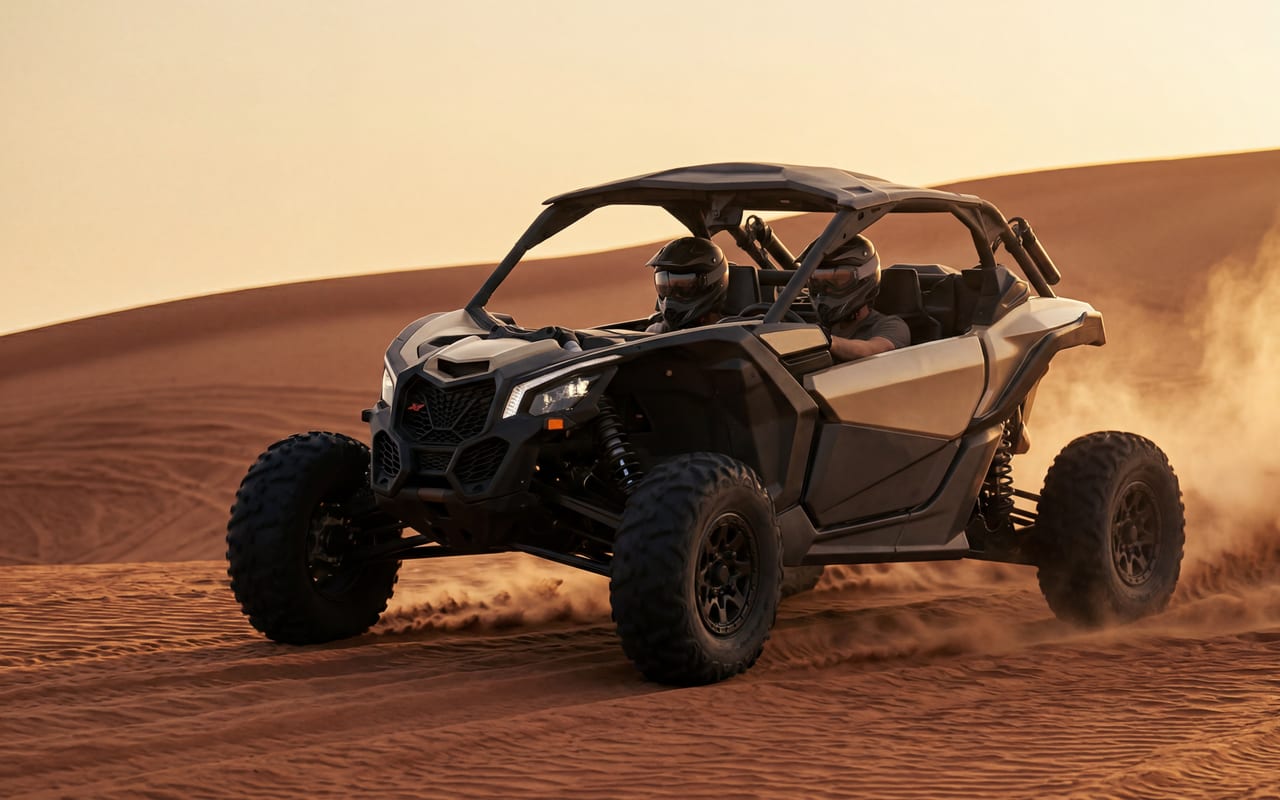
A safety helmet should be part of the setup for every rider, and it should fit properly. A helmet that shifts around, sits too low over the eyes or leaves the chin exposed is not doing its job. Ask whether helmets are cleaned and checked between users, and whether different sizes are available. Gloves, closed toe footwear and sensible clothing also matter, especially in sand that can get hot.
The briefing is just as important as the gear. A useful briefing explains how to start, stop, steer, lean and keep a safe distance from other riders. It should cover what to do if the bike tips, if visibility drops or if the route becomes crowded. Pay attention to how instructions are delivered. Calm, specific guidance is easier to follow than a rushed safety speech.
Ask about the quad bike engine kill switch and where it sits. Knowing how to stop the engine quickly is useful if the bike feels unstable or the rider becomes confused. This should be explained before riding begins, not halfway through the route. The same applies to ATV throttle control. New riders often squeeze too hard, especially when the sand feels soft. A good introduction will explain smooth pressure, steady speed and why sudden moves can cause loss of control.
Compare the route, not just the vehicle
The route shapes the experience more than most people expect. Flat hard sand gives beginners a chance to get comfortable. Rolling dunes add challenge, but the sand dune gradient matters. Gentle slopes are manageable; steep crests and sudden drop-offs demand more skill and should not be treated as casual terrain. A guided trail can help riders stay on ground that suits the group and avoid areas where driving is restricted.
Ask how long the riding segment lasts and whether there are stops. Continuous riding can be tiring in warm conditions, while frequent stops may make the trip feel short. Balance matters. A route with a few pauses for water, photos and regrouping often works better than a fast run with little structure.
Also consider the surface conditions. Soft sand feels slower and more technical, while firmer sand allows easier movement. After wind or heavy use, the surface can change. A responsible operator will adjust the route when conditions are not suitable instead of forcing riders through difficult ground.
Think about timing and desert conditions
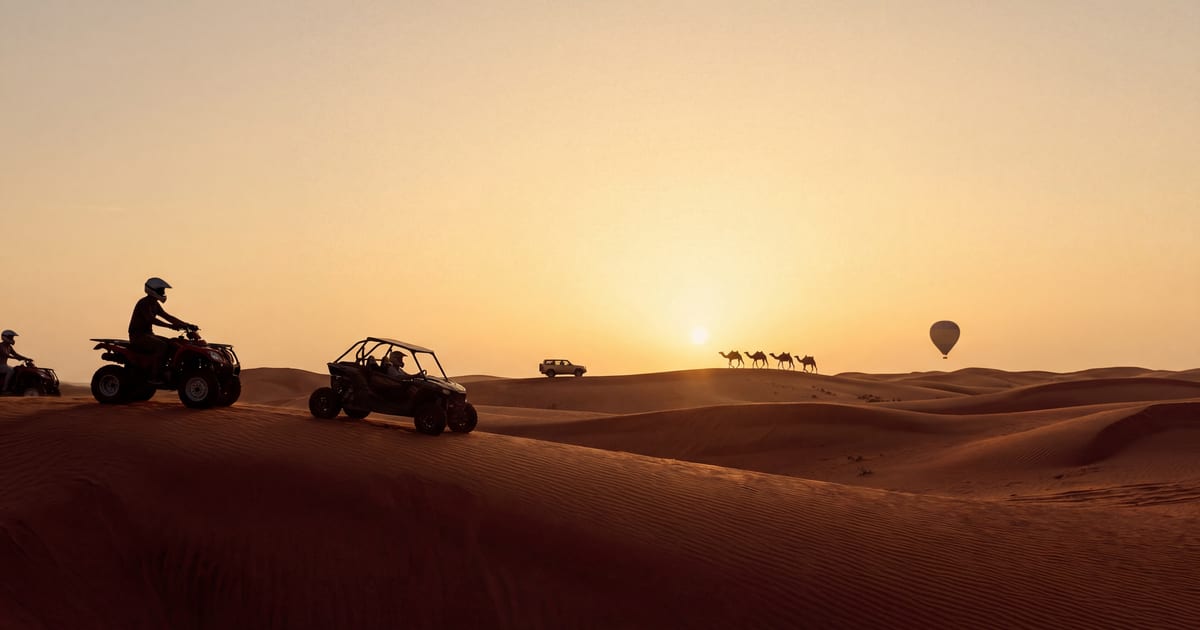
Sunset timing is one of the biggest practical choices. Late afternoon light is attractive and temperatures are usually more comfortable than at midday. The trade-off is that popular times can be busy, and the ride may feel rushed if the schedule is tight. Earlier rides can be quieter, but heat may be more intense. A morning or late afternoon slot often gives a better balance for riders who want clear views and a manageable pace.
Desert sand temperature can affect both comfort and control. Hot sand can make boots uncomfortable and can reduce the willingness to stop or adjust position. In cooler hours, the surface may feel firmer and easier to read. Bring water, wear breathable layers and avoid clothing that can catch on the vehicle. Sunglasses and sun protection are useful when glare rises off the sand.
Visibility can change quickly when wind lifts dust. If the air becomes hazy, riders need to slow down and stay close to the guide. This is another reason to choose an outing that uses clear signals and keeps the group together. A scenic route is only useful if riders can see where they are going.
Ask how the ride is supervised
Supervision makes a real difference on a quad outing. A guide should be able to explain the route, monitor speed and help riders who struggle. The best arrangement is one where beginners are not left at the back with little support. Ask whether the group is split by ability and whether a lead rider sets a pace that everyone can follow.
Hand signals, short pauses and clear starting points all reduce confusion. If the route includes other vehicles, ask how traffic is managed. Mixing quad riders with fast desert cars without clear separation can feel tense and unsafe. A well organised outing keeps different vehicle types apart where possible and gives each group enough space.
Before booking, search for a quad bike desert safari dubai that explains its riding format in plain terms. The wording should tell you what happens, how long it lasts, what is included and what riders need to bring. Vague descriptions may still lead to a good day, but they make it harder to judge fit before you arrive.
Read the fine print before committing
Once the ride itself makes sense, check the practical terms. Confirm the meeting point, start time and whether transport is included. Ask what happens if weather affects the trip and how changes are handled. A clear policy is more useful than a promise that everything will be perfect.
Insurance and liability details deserve attention too. Find out what cover applies during riding and what the rider is responsible for. If something is damaged or someone is injured, clear information prevents awkward surprises. This is not the most exciting part of planning, but it helps you compare options on more than visuals.
Group size also matters. A smaller group usually gives riders more room and more direct attention. A larger group may still work well if it is organised, but it can mean longer waits and less flexibility. Think about who is coming. Families with children, couples and solo riders often need different levels of structure.
Make the final choice with comfort in mind
By this stage, narrow the options to the ones that match your riding level, preferred time and group needs. Compare what each one offers in terms of route, supervision, safety gear and clarity. Avoid choosing only by the biggest bike or the most dramatic photos. The right ride is the one where the rider feels prepared, the route is suitable and the pace leaves room to enjoy the desert.
On the day, arrive early enough to listen properly, fit the helmet and ask remaining questions. Start gently, keep a safe gap and follow the guide's signals. If the bike feels hard to control, say so before the group moves into harder terrain. A good outing should feel exciting without depending on risk.
A quad ride in the desert is at its best when preparation matches the landscape. Pick the route with care, respect the conditions and give safety the same attention as the scenery. That approach turns a simple booking decision into a far better day on the sand.